
Healthy Teeth Never Bleed โ€“ What Your Gums Are Trying to Tell You

๐Ÿ“Œ Introduction

If your gums bleed while brushing, itโ€™s easy to ignore it.

๐Ÿ‘‰ โ€œMaybe I brushed too hardโ€ฆโ€
๐Ÿ‘‰ โ€œIt happens sometimesโ€ฆโ€

But as we explained in our previous blog on bleeding gums, this is not normal.

๐Ÿ‘‰ Healthy teeth and gums do NOT bleed. Ever.

Bleeding is a signalโ€”your body is trying to warn you. And the earlier you understand it, the easier it is to fix.

If youโ€™re noticing this sign, itโ€™s time for a dental checkup in Gohana before it progresses.


๐Ÿง  What Healthy Gums Should Actually Feel Like

Letโ€™s set the baseline.

โœ… Healthy Gums:

  • Pink in color
  • Firm and tight
  • No swelling
  • No bleeding while brushing or flossing

๐Ÿ‘‰ If your gums donโ€™t match this, something is wrong.


๐Ÿฉธ Why Do Gums Bleed If Teeth Are Not Healthy?

Bleeding gums are usually caused by inflammation.

๐Ÿ” Whatโ€™s Happening Inside:

  • Plaque (bacteria layer) builds up on teeth
  • Gums react to bacteria
  • Swelling and irritation begin
  • Bleeding starts

๐Ÿ‘‰ This is your bodyโ€™s early warning system.


๐Ÿšจ What Your Gums Are Trying to Tell You

Bleeding gums are not randomโ€”they carry a message.

๐Ÿ—ฃ๏ธ Your Gums Are Saying:

๐Ÿ‘‰ โ€œThereโ€™s infection hereโ€
๐Ÿ‘‰ โ€œCleaning is not enoughโ€
๐Ÿ‘‰ โ€œYou need dental attentionโ€

Ignoring these signals can lead to serious issues.


โš ๏ธ The Progression (If You Ignore It)

This is where most people make a mistake.

Stage 1: Gingivitis

  • Mild bleeding
  • Swollen gums

Stage 2: Periodontitis

  • Gum recession
  • Bone damage

Stage 3: Tooth Loss

  • Loose teeth
  • Permanent damage

๐Ÿ‘‰ All of this can start from something as simple as bleeding gums.


๐Ÿ”„ Connection to Overall Health

Your oral health is not separate from your body.

As discussed in earlier blogs like Vitamin Deficiency Test in Sonipat, deficiencies and general health conditions can also affect your gums.

๐Ÿ‘‰ Thatโ€™s why dental symptoms should never be ignored.


๐Ÿชฅ Common Mistakes That Make It Worse

โŒ Brushing too hard

โŒ Ignoring bleeding

โŒ Skipping dental visits

โŒ Poor oral hygiene

๐Ÿ‘‰ These habits allow the problem to grow silently.


๐Ÿ›ก๏ธ What You Should Do Instead

โœ… Brush gently twice a day

โœ… Floss regularly

โœ… Use proper oral care products

โœ… Visit a dentist regularly

๐Ÿ‘‰ Most importantly:
Get a dental checkup in Gohana to identify the root cause.


๐Ÿฅ When Should You See a Dentist?

๐Ÿ‘‰ Immediately, if you notice:

  • Regular bleeding
  • Swelling or redness
  • Bad breath
  • Gum recession

๐Ÿ‘‰ Early treatment is simple. Late treatment is complex.


๐Ÿ‘จโ€๐Ÿ‘ฉโ€๐Ÿ‘ง Who Should Be Extra Careful?

  • Adults with busy lifestyles
  • Smokers
  • Diabetic patients
  • Elderly individuals

๐Ÿ‘‰ These groups are at higher risk of gum disease.


๐Ÿ“ž Take Action Before It Becomes Painful

Remember:

๐Ÿ‘‰ Pain is the last stageโ€”not the first.

๐Ÿ“ฒ Call Now

Get expert advice

๐Ÿฅ Visit Clinic

Book your dental checkup

๐Ÿ‘‰ Early care saves your teeth.


โ“ FAQs โ€“ Healthy Gums & Bleeding

โ“ Do healthy gums ever bleed?

๐Ÿ‘‰ No, bleeding is always a warning sign.

โ“ Can bleeding gums be cured?

๐Ÿ‘‰ Yes, if treated early.

โ“ Is it serious if there is no pain?

๐Ÿ‘‰ Yes, most early dental issues are painless.

โ“ How often should I get a checkup?

๐Ÿ‘‰ Every 6 months is ideal.

โ“ Can I ignore occasional bleeding?

๐Ÿ‘‰ No, even occasional bleeding should be checked.


๐Ÿš€ Final CTA โ€“ Listen to Your Gums

Your gums are sending you a messageโ€”donโ€™t ignore it.

๐Ÿ‘‰ Book your dental checkup in Gohana today
๐Ÿ‘‰ Detect problems early
๐Ÿ‘‰ Keep your teeth strong and healthy

๐Ÿ“ž Call now or visit the clinic to protect your smile.
Bleeding Gums Are Not Normal โ€“ Hereโ€™s the Real Reason (Explained Simply)

๐Ÿ“Œ Introduction

Many people ignore bleeding gums thinking:
๐Ÿ‘‰ โ€œItโ€™s just because I brushed too hard.โ€

But hereโ€™s the truth:

๐Ÿ‘‰ Bleeding gums are NOT normalโ€”and theyโ€™re often the first warning sign of a bigger dental problem.

In our previous blog on silent signs your teeth are in trouble, we discussed how dental issues can develop without pain. Bleeding gums are one of the earliest and most ignored signs.

If youโ€™re noticing this, itโ€™s time to consider a dental checkup in Gohana before the condition worsens.


โš ๏ธ Why Do Gums Bleed?

Healthy gums do NOT bleed during brushing or flossing.

๐Ÿง  The Real Reason:

Bleeding usually happens due to inflammation caused by bacteria.

๐Ÿ‘‰ When plaque builds up along the gum line:

  • Gums become irritated
  • Swelling starts
  • Bleeding occurs

๐Ÿฆ  The Main Cause โ€“ Gum Disease (Gingivitis)

The most common reason behind bleeding gums is:

๐Ÿ‘‰ Gingivitis (early-stage gum disease)

๐Ÿ” What Happens:

  • Plaque accumulates on teeth
  • Bacteria irritate gums
  • Gums become red, swollen, and bleed

๐Ÿ‘‰ The good news:
โœ” Itโ€™s reversible if treated early.


๐Ÿšจ What Happens If You Ignore It?

This is where things get serious.

โš ๏ธ Untreated Gingivitis Can Turn Into:

  • Periodontitis (advanced gum disease)
  • Gum recession
  • Tooth loosening
  • Tooth loss

๐Ÿ‘‰ By the time pain starts, the damage may already be significant.


๐Ÿ” Other Possible Causes of Bleeding Gums

While gum disease is the most common reason, other causes include:

  • Poor oral hygiene
  • Vitamin deficiencies
  • Hormonal changes
  • Certain medications

๐Ÿ‘‰ As we discussed in earlier blogs like Vitamin Deficiency Test in Sonipat, nutritional issues can also affect gum health.


๐Ÿชฅ Common Myths (And the Truth)

โŒ Myth: โ€œItโ€™s normal if gums bleed sometimesโ€

๐Ÿ‘‰ โœ” Truth: Itโ€™s an early warning sign

โŒ Myth: โ€œI should stop brushing if gums bleedโ€

๐Ÿ‘‰ โœ” Truth: Proper brushing is essential

โŒ Myth: โ€œIt will go away on its ownโ€

๐Ÿ‘‰ โœ” Truth: It usually worsens without treatment


๐Ÿฅ When Should You See a Dentist?

๐Ÿ‘‰ Donโ€™t wait. Visit immediately if:

  • Gums bleed regularly
  • Swelling or redness is visible
  • Bad breath persists
  • Teeth feel loose

๐Ÿ‘‰ A quick dental checkup in Gohana can detect and treat the issue early.


๐Ÿ›ก๏ธ How to Prevent Bleeding Gums

โœ… Simple Steps:

  • Brush twice daily (gently)
  • Floss regularly
  • Use a soft-bristle toothbrush
  • Avoid tobacco
  • Maintain a balanced diet

๐Ÿ‘‰ Prevention is always easier than treatment.


๐Ÿ‘จโ€๐Ÿ‘ฉโ€๐Ÿ‘ง Who Is at Higher Risk?

  • Adults with poor oral hygiene
  • Diabetic patients
  • Elderly individuals
  • People with vitamin deficiencies

๐Ÿ‘‰ Regular checkups are especially important for these groups.


๐Ÿ“ž Easy Access to Dental Care in Gohana

๐Ÿ“ฒ Call Now

Get expert guidance

๐Ÿฅ Visit Clinic

Consult professionals at your nearest dental care center

๐Ÿ‘‰ Early diagnosis = faster recovery.


โ“ FAQs โ€“ Bleeding Gums

โ“ Are bleeding gums serious?

๐Ÿ‘‰ Yes, they often indicate gum disease.

โ“ Can bleeding gums heal on their own?

๐Ÿ‘‰ Not usuallyโ€”they need proper care or treatment.

โ“ Should I stop brushing if gums bleed?

๐Ÿ‘‰ No, continue brushing gently.

โ“ How long does treatment take?

๐Ÿ‘‰ Early-stage issues can improve quickly with care.

โ“ Is it painful?

๐Ÿ‘‰ Early stages are usually painless, which is why people ignore it.

5 Silent Signs Your Teeth Are in Trouble (Even Without Pain)

๐Ÿ“Œ Introduction

Most people believe that tooth pain = dental problem.
But hereโ€™s the truth:

๐Ÿ‘‰ Many serious dental issues develop silentlyโ€”without any pain.

In our previous Parent FAQ blog, we discussed how early symptoms in children should never be ignored. The same principle applies to dental healthโ€”waiting for pain often means the problem has already progressed.

If you notice these early warning signs, itโ€™s time to consider a dental checkup in Gohana before things get worse.


โš ๏ธ Why Dental Problems Often Go Unnoticed

Teeth donโ€™t always hurt in the beginning.

๐Ÿง  Reasons:

  • Nerve damage happens slowly
  • Gum issues start silently
  • Cavities develop without symptoms

๐Ÿ‘‰ By the time pain appears, treatment becomes more complex and costly.


๐Ÿšจ 5 Silent Signs Your Teeth Are in Trouble

๐ŸŸก 1. Bleeding Gums While Brushing

If your gums bleed even slightly:

๐Ÿ‘‰ Itโ€™s NOT normal.

Possible Cause:

  • Gum infection (gingivitis)
  • Early stage of gum disease

๐Ÿ‘‰ Ignoring this can lead to serious dental issues.


๐Ÿ˜ฌ 2. Persistent Bad Breath

Bad breath that doesnโ€™t go away even after brushing?

Possible Cause:

  • Bacterial buildup
  • Gum disease
  • Tooth decay

๐Ÿ‘‰ This is often one of the first silent warning signs.


๐Ÿฆท 3. Tooth Sensitivity to Hot or Cold

Do you feel discomfort when drinking tea or cold water?

Possible Cause:

  • Enamel wear
  • Early cavity formation
  • Exposed tooth roots

๐Ÿ‘‰ Sensitivity is your bodyโ€™s way of signaling a problem.


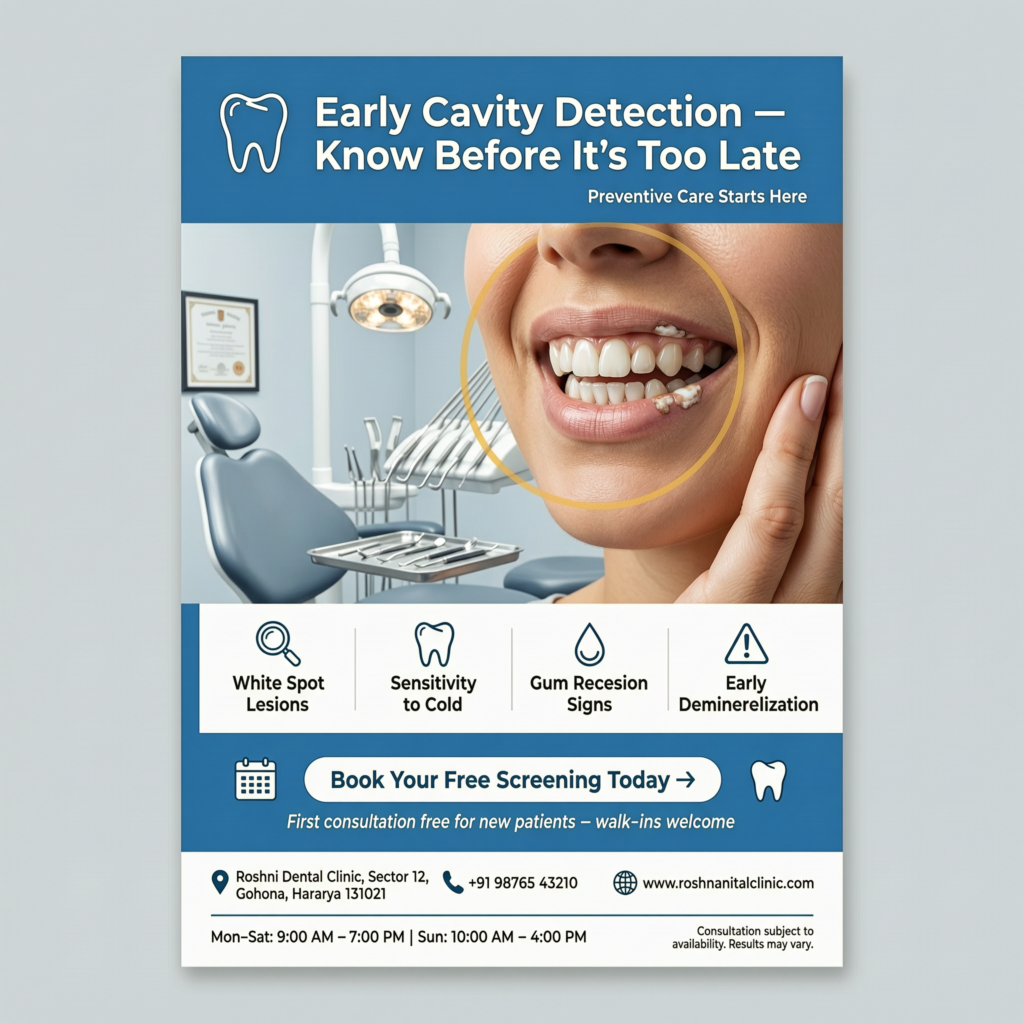
๐Ÿชฅ 4. White, Brown, or Dark Spots on Teeth

Visible spots are never just โ€œcosmetic.โ€

Possible Cause:

  • Early tooth decay
  • Mineral loss
  • Plaque buildup

๐Ÿ‘‰ These spots can turn into cavities if untreated.


๐Ÿ˜ท 5. Receding Gums (Teeth Look Longer)

If your teeth appear longer than before:

Possible Cause:

  • Gum recession
  • Periodontal disease

๐Ÿ‘‰ This can eventually lead to tooth loosening.


โš ๏ธ Donโ€™t Wait for Pain to Act

Most patients visit a dentist only when pain starts.

๐Ÿ‘‰ But by then:

  • Cavities may be deep
  • Infection may spread
  • Treatment becomes expensive

๐Ÿ‘‰ Early detection through a dental checkup in Gohana can prevent major problems.


๐Ÿฅ When Should You Visit a Dentist?

๐Ÿ‘‰ Visit immediately if you notice:

  • Bleeding gums
  • Persistent bad breath
  • Tooth sensitivity
  • Visible spots or discoloration

๐Ÿ‘‰ Regular dental checkups are as important as general health consultations.


๐Ÿ”„ Preventive Care is Always Better

Just like we discussed in previous blogs about early diagnosis:

๐Ÿ‘‰ Prevention saves:

  • Time
  • Money
  • Pain

๐Ÿ‘‰ Routine checkups help detect issues early and maintain oral health.


๐Ÿ‘จโ€๐Ÿ‘ฉโ€๐Ÿ‘ง Who Should Be More Careful?

  • Children (developing teeth)
  • Adults with poor oral hygiene
  • Elderly patients
  • People with diabetes or gum issues

๐Ÿ‘‰ Everyone benefits from preventive dental care.


๐Ÿ“ž How to Book a Dental Checkup in Gohana

๐Ÿ“ฒ Call Now

Speak with clinic staff

๐Ÿฅ Visit Clinic

Get your teeth checked by professionals

๐Ÿ‘‰ Early action ensures better outcomes.


โ“ FAQs โ€“ Silent Dental Problems

โ“ Can dental problems exist without pain?

๐Ÿ‘‰ Yes, many issues develop silently.

โ“ Is bleeding gums serious?

๐Ÿ‘‰ Yes, it can indicate gum disease.

โ“ How often should I get a dental checkup?

๐Ÿ‘‰ Every 6 months is recommended.

โ“ Can sensitivity go away on its own?

๐Ÿ‘‰ No, it usually needs treatment.

โ“ Are dental checkups expensive?

๐Ÿ‘‰ Preventive care is much cheaper than treatment.


๐Ÿš€ Final CTA โ€“ Donโ€™t Wait for Pain

Pain is the last warningโ€”not the first.

๐Ÿ‘‰ Book your dental checkup in Gohana today
๐Ÿ‘‰ Detect problems early
๐Ÿ‘‰ Protect your smile and health

๐Ÿ“ž Call now or visit the clinic to get started.

Parent FAQ โ€“ Common Questions About Child Healthcare in Gohana

๐Ÿ“Œ Introduction

When it comes to your childโ€™s health, even small concerns can feel overwhelming. Parents often have multiple questionsโ€”but not always the right guidance.

In our previous blog on therapy packages in Gohana, we discussed structured care for recovery. But for children, early consultation and clarity are even more important.

๐Ÿ‘‰ This Parent FAQ guide answers the most common concerns parents haveโ€”so you can take the right steps at the right time.


๐Ÿง  Why Parents Should Not Ignore Small Symptoms

Children may not always express what they feel.

โš ๏ธ Commonly Ignored Signs:

  • Frequent fever
  • Low appetite
  • Weakness or fatigue
  • Delayed growth
  • Behavioral changes

๐Ÿ‘‰ Early consultation at Roshni Healthcare Gohana helps prevent complications.


โ“ Most Common Parent FAQs

๐Ÿ‘ถ Q1. When should I take my child to a doctor?

๐Ÿ‘‰ Visit a doctor if:

  • Fever lasts more than 2 days
  • Child is unusually inactive
  • Persistent cough or vomiting
  • Sudden behavioral changes

๐Ÿ‘‰ Donโ€™t waitโ€”early consultation ensures faster recovery.


๐Ÿผ Q2. How often should my child have a health checkup?

๐Ÿ‘‰ Ideally:

  • Infants: Regular pediatric visits
  • Toddlers: Every 3โ€“6 months
  • School-age children: Once a year

๐Ÿ‘‰ Doctors may recommend a full body checkup if needed.


๐ŸŽ Q3. My child is weak and not eating properly. What should I do?

๐Ÿ‘‰ Possible reasons:

  • Vitamin deficiency
  • Digestive issues
  • Growth-related changes

๐Ÿ‘‰ As discussed in our earlier blog on Vitamin Deficiency Test in Sonipat, such symptoms should not be ignored.


๐Ÿง’ Q4. Is therapy needed for children?

๐Ÿ‘‰ Yes, in some cases:

  • Developmental delays
  • Physical weakness
  • Post-injury recovery

๐Ÿ‘‰ Doctors may suggest therapy plans similar to therapy packages in Gohana for structured improvement.


๐Ÿค’ Q5. When is fever dangerous for children?

๐Ÿ‘‰ Seek immediate consultation if:

  • Fever is very high
  • Child is lethargic
  • Fever persists beyond 2โ€“3 days

๐Ÿ‘‰ Early medical attention prevents complications.


๐Ÿงฌ Q6. Should I get tests done for my child?

๐Ÿ‘‰ Only if recommended by a doctor.

Common tests include:

  • Blood tests
  • Vitamin levels
  • Basic health screening

๐Ÿ‘‰ These help identify underlying issues early.


๐Ÿฅ Q7. Where should I take my child for treatment in Gohana?

๐Ÿ‘‰ Choose a trusted clinic like Roshni Healthcare Gohana for:

  • Experienced doctors
  • Child-friendly care
  • Complete medical support

โณ Q8. Can I wait and watch symptoms?

๐Ÿ‘‰ Short answer: Not always.

๐Ÿ‘‰ Delaying care can:

  • Worsen condition
  • Increase treatment time
  • Cause complications

๐Ÿ‘‰ Itโ€™s better to consult early.


๐ŸŽฏ When Should Parents Take Immediate Action?

๐Ÿ‘‰ Donโ€™t delay if your child has:

  • Continuous fever
  • Breathing issues
  • Severe weakness
  • Sudden behavior change

๐Ÿ‘‰ Immediate consultation is critical.


๐Ÿ“ž Easy Access to Child Healthcare in Gohana

Getting help is simple:

๐Ÿ“ฒ Call Now

Speak with medical staff

๐Ÿฅ Visit Clinic

Walk into Roshni Healthcare Gohana

๐Ÿ‘‰ Quick consultation ensures peace of mind for parents.


๐Ÿš€ Final CTA โ€“ Your Childโ€™s Health Comes First

As a parent, your instinct mattersโ€”but expert advice is essential.

๐Ÿ‘‰ Book a doctor consultation for your child today
๐Ÿ‘‰ Get answers to your concerns
๐Ÿ‘‰ Ensure healthy growth and development

Therapy Packages in Gohana โ€“ Affordable Care Plans for Better Health

๐Ÿ“Œ Introduction

Healthcare isnโ€™t just about one-time visitsโ€”itโ€™s about consistent care and long-term recovery. Thatโ€™s where structured therapy plans make a difference.

In our previous blog on free doctor consultation in Gohana, we highlighted how early consultation helps identify health issues. The next step after diagnosis?
๐Ÿ‘‰ Right therapy, at the right time, with the right plan.

Thatโ€™s why therapy packages in Gohana are becoming the preferred choice for patients looking for affordable and continuous treatment.


๐Ÿฅ What Are Therapy Packages?

Therapy packages are pre-designed treatment plans that include multiple sessions for specific health conditions.

โœ… Typically Include:

  • Doctor consultation
  • Therapy sessions (as required)
  • Follow-up monitoring
  • Guidance for recovery

๐Ÿ‘‰ These packages are designed to provide complete careโ€”not just temporary relief.


๐ŸŽฏ Why Choose Therapy Packages Instead of Single Visits?

Many patients opt for one-time treatmentโ€”but that often leads to incomplete recovery.

๐Ÿ’ก Benefits of Therapy Packages:

โœ” Consistent Treatment

Regular sessions ensure better healing and long-term results.

โœ” Cost-Effective

Packages are more affordable than multiple individual visits.

โœ” Better Monitoring

Doctors can track progress and adjust treatment accordingly.

๐Ÿ‘‰ After your consultation at Roshni Healthcare Gohana, therapy packages help continue your care journey effectively.


๐Ÿง  Conditions That May Require Therapy

Therapy is often recommended for:

  • Chronic pain (back, neck, joints)
  • Post-injury recovery
  • Neurological conditions
  • Age-related mobility issues
  • General weakness and rehabilitation

๐Ÿ‘‰ Early consultationโ€”like the free doctor consultation in Gohanaโ€”helps identify if therapy is needed.


๐Ÿ”„ From Consultation to Recovery โ€“ Complete Care

As discussed in our last blog:

๐Ÿ‘‰ Step 1: Free consultation
๐Ÿ‘‰ Step 2: Diagnosis
๐Ÿ‘‰ Step 3: Therapy package

๐Ÿ‘‰ Doctors may also recommend a full body checkup before starting therapy for better understanding of your health.


๐Ÿ‘จโ€๐Ÿ‘ฉโ€๐Ÿ‘ง Who Should Consider Therapy Packages?

  • Elderly patients needing regular care
  • Patients recovering from injury or surgery
  • Individuals with chronic pain
  • People with mobility or strength issues

๐Ÿ‘‰ Therapy packages are ideal for those who need continuous medical attention.


๐Ÿ’ฐ Why Therapy Packages Are Worth It

Instead of paying repeatedly for each visit:

๐Ÿ‘‰ Packages offer:

  • Lower overall cost
  • Structured treatment plan
  • Better results

๐Ÿ‘‰ This makes them a smart healthcare investment.


โณ Limited Availability โ€“ Book Early

Due to increasing demand:

  • Limited therapy slots available
  • Priority given to registered patients
  • Early booking recommended

๐Ÿ‘‰ Donโ€™t delay your recovery.


๐Ÿ“ž How to Book Therapy Packages in Gohana

๐Ÿ“ฒ Call Now

Get details and book your slot

๐Ÿฅ Visit Clinic

Consult doctors at Roshni Healthcare Gohana

๐Ÿ‘‰ Therapy plans are customized based on your condition.


โ“ FAQs โ€“ Therapy Packages in Gohana

โ“ Are therapy packages customizable?

๐Ÿ‘‰ Yes, based on your health condition and doctor advice.

โ“ How many sessions are included?

๐Ÿ‘‰ It depends on the treatment plan.

โ“ Is consultation included?

๐Ÿ‘‰ Initial consultation may be included or required before starting.

โ“ Are therapy packages affordable?

๐Ÿ‘‰ Yes, they are more cost-effective than individual sessions.

โ“ Who needs therapy?

๐Ÿ‘‰ Patients with chronic pain, injury recovery, or mobility issues.

Free Doctor Consultation in Gohana โ€“ Limited Time Offer (Book Now)

๐Ÿ“Œ Introduction

Healthcare should never be delayedโ€”but cost often becomes a reason people postpone doctor visits.

Thatโ€™s why free doctor consultation in Gohana is now available for a limited time at Roshni Healthcare Gohana.

๐Ÿ‘‰ If you or your family members are experiencing any health concerns, this is the perfect opportunity to consult a doctor without any consultation fee.


๐ŸŽ Whatโ€™s Included in the Free Consultation Offer?

This limited-time offer is designed to help new patients get medical guidance easily.

โœ… You Get:

  • Free initial doctor consultation
  • Basic health evaluation
  • Guidance on symptoms and next steps

๐Ÿ‘‰ Ideal for patients who have been delaying a checkup.


โš ๏ธ Why You Should Not Ignore Early Symptoms

Many people ignore small health issues like:

  • Fatigue or weakness
  • Mild fever or body pain
  • Digestive issues
  • Headaches

๐Ÿ‘‰ As discussed in our previous blog on Vitamin Deficiency Test in Sonipat, small symptoms can indicate bigger underlying problems.

๐Ÿ‘‰ Early consultation helps prevent serious conditions.


๐Ÿฅ Why Choose Roshni Healthcare Gohana?

Choosing the right clinic matters for accurate diagnosis and care.

โญ Key Benefits:

  • Experienced doctors
  • Multi-speciality consultation
  • Patient-focused care
  • Affordable diagnostic services

๐Ÿ‘‰ At Roshni Healthcare Gohana, you get trusted healthcare close to home.


๐Ÿ‘จโ€โš•๏ธ Who Should Book This Free Consultation?

This offer is perfect for:

  • Patients with ongoing symptoms
  • Senior citizens needing routine checkups
  • Women & children requiring medical advice
  • Anyone who has delayed visiting a doctor

๐Ÿ‘‰ If youโ€™ve been waiting, now is the right time.


โณ Limited Time Offer โ€“ Donโ€™t Miss Out

โš ๏ธ Important:

  • Limited slots available per day
  • Valid for a short period only
  • First-come, first-served basis

๐Ÿ‘‰ Delaying may mean missing the opportunity.


๐Ÿ“ž How to Book Free Doctor Consultation in Gohana

Booking is quick and simple:

๐Ÿ“ฒ Call Now

Talk directly with hospital staff

๐Ÿฅ Walk-In Visit

Visit Roshni Healthcare Gohana for immediate consultation

๐Ÿ‘‰ Same-day consultation may be available (subject to availability).


๐ŸŽฏ What Happens After Consultation?

Based on your symptoms, the doctor may:

  • Prescribe treatment
  • Recommend tests
  • Suggest a full body checkup for deeper analysis

๐Ÿ‘‰ This ensures complete and accurate diagnosis.


โ“ FAQs โ€“ Free Doctor Consultation in Gohana

โ“ Is the consultation completely free?

๐Ÿ‘‰ Yes, the initial consultation is free for new patients.

โ“ Do I need an appointment?

๐Ÿ‘‰ Recommended, but walk-ins are allowed (subject to slots).

โ“ Are tests included in the offer?

๐Ÿ‘‰ No, only consultation is free. Tests may be charged separately.

โ“ Who can avail this offer?

๐Ÿ‘‰ New patients visiting the clinic.

โ“ How long is the offer valid?

๐Ÿ‘‰ Limited time onlyโ€”subject to availability.


๐Ÿš€ Final CTA โ€“ Book Before Slots Fill

Your health should never wait.

๐Ÿ‘‰ Book your free doctor consultation in Gohana today
๐Ÿ‘‰ Get expert medical advice
๐Ÿ‘‰ Take the first step toward better health

๐Ÿ“ž Call now or visit Roshni Healthcare Gohana to secure your slot.

Group Session Glimpse โ€“ Roshni Healthcare Gohana (Health Awareness & Patient Education)

 โ€œWhy Do Group Health Sessions Matter in Todayโ€™s Healthcare?โ€

Many patients feel confused about their condition, treatment, or lifestyle changes after visiting a hospital or clinic.

They often:

  • Forget doctor instructions
  • Feel hesitant to ask questions
  • Rely on incomplete online information

To solve this gap, Roshni Healthcare Gohana conducts group health sessions that focus on awareness, clarity, and patient confidence.


๐Ÿฅ What Is a Group Session at Roshni Healthcare?

A group session glimpse refers to a structured health awareness interaction where:

  • Patients and caregivers gather together
  • Healthcare professionals share guidance
  • Common health concerns are discussed openly

๐Ÿ‘‰ The goal is simple: better understanding and better health outcomes


๐Ÿ‘จโ€โš•๏ธ What Happens During a Group Session Glimpse?

Each session is designed in a simple, easy-to-understand format:

๐Ÿฉบ 1. Doctor Interaction

  • Explanation of common health issues
  • Basic treatment awareness
  • Preventive care guidance

๐Ÿ’ฌ 2. Open Discussion

  • Patients can hear shared concerns
  • Common doubts are addressed
  • Real-life health situations are explained

๐Ÿ“š 3. Health Education

  • Lifestyle tips
  • Diet and routine advice
  • Disease prevention awareness

๐Ÿค 4. Supportive Environment

  • Patients feel more confident
  • Emotional reassurance is provided
  • Better understanding of treatment process

๐ŸŽฏ Why Roshni Healthcare Conducts Group Sessions

โ“ What is the purpose behind these sessions?

Roshni Healthcare focuses on:

  • Improving patient awareness
  • Reducing confusion about treatment
  • Encouraging preventive healthcare
  • Building trust between doctors and patients

๐Ÿ‘‰ This creates a stronger healthcare experience for everyone.


๐Ÿ‘จโ€๐Ÿ‘ฉโ€๐Ÿ‘ง Who Can Attend These Sessions?

These group sessions are open for:

  • Patients undergoing treatment
  • Family members and caregivers
  • Individuals seeking health awareness
  • Community members interested in preventive care

๐Ÿ‘‰ Anyone who wants better health understanding can participate.


๐Ÿง  Benefits of Group Health Sessions

โ“ Why are these sessions important?

They help in:

  • Clear understanding of medical advice
  • Better treatment compliance
  • Reduced fear and confusion
  • Increased awareness of health conditions

๐Ÿ‘‰ Patients become more informed and confident.


โš ๏ธ Why Group Sessions Are Needed Today

In todayโ€™s world, people often rely on:

  • Internet searches
  • Social media advice
  • Misleading health information

๐Ÿ‘‰ This creates confusion and anxiety.

Group sessions solve this by offering:

  • Verified medical guidance
  • Direct doctor communication
  • Real-world explanations

โค๏ธ Building Trust Through Awareness

Healthcare is not just treatmentโ€”it is understanding.

Through these sessions, Roshni Healthcare Gohana helps patients:

  • Feel more informed
  • Ask better questions
  • Make confident health decisions

๐Ÿ“ Group Session Glimpse at Roshni Healthcare Gohana

Each session reflects:

  • Patient-friendly communication
  • Simple medical explanations
  • Community-focused healthcare approach

๐Ÿ‘‰ The aim is to make healthcare more accessible and understandable for everyone.


๐Ÿ“ž Want to Learn More?

If you want to attend or understand more about health awareness programs:

๐Ÿ‘‰ Visit Roshni Healthcare Gohana
๐Ÿ‘‰ Speak with healthcare professionals
๐Ÿ‘‰ Stay updated on upcoming group sessions


โ“ FAQs โ€“ Group Health Sessions

โ“ What is a group session in healthcare?

It is a guided interaction where doctors educate multiple patients together about health topics.


โ“ Are group sessions only for patients?

No, caregivers and general community members can also attend.


โ“ Do group sessions replace doctor consultation?

No, they are for awareness and supportโ€”not individual diagnosis.


โ“ Why are group sessions useful?

They improve understanding, reduce confusion, and build confidence in treatment.


โ“ Where are these sessions conducted?

At Roshni Healthcare Gohana as part of awareness and patient education programs.


Daily Routine for ASD Child: Simple Structure for Better Growth & Comfort

๐Ÿ’™ โ€œHow Do You Build the Right Daily Routine for an ASD Child?โ€

Parents of children with Autism Spectrum Disorder (ASD) often face one common challenge:

๐Ÿ‘‰ How to create a daily routine that feels stable, calm, and supportive for their child.

The truth is:

๐Ÿ‘‰ A predictable daily routine is one of the most helpful tools for an ASD childโ€™s development.

It reduces anxiety, improves behavior, and builds independence over time.


๐Ÿง  Why Routine Is So Important for ASD Children

Children with ASD often prefer:

  • Predictability
  • Structure
  • Familiar patterns

โ“ What happens without routine?

  • Anxiety increases
  • Behavioral challenges may rise
  • Difficulty in transitions (one activity to another)

๐Ÿ‘‰ A stable routine helps the child feel safe and in control.


๐ŸŒ… 1. Morning Routine โ€“ Start the Day Calmly

๐Ÿ•— Suggested structure:

  • Wake up at the same time daily
  • Gentle verbal or visual cues
  • Simple hygiene activities (brushing, washing)
  • Light breakfast at a fixed time

๐Ÿ’ก Why it matters:

A consistent morning routine sets the tone for the entire day.

๐Ÿ‘‰ Predictability = emotional stability


๐Ÿ“š 2. Learning Time โ€“ Short & Focused Sessions

๐Ÿง  Best approach:

  • 20โ€“30 minute learning blocks
  • Visual learning tools
  • Simple instructions (one step at a time)

โ“ Why short sessions work better?

ASD children often respond better to:

  • Clear structure
  • Less sensory overload
  • Repetition-based learning

๐ŸŽฏ 3. Therapy / Skill Development Time

Depending on the childโ€™s needs:

  • Speech therapy activities
  • Behavioral exercises
  • Occupational therapy tasks

๐Ÿ’ก Key point:

Consistency is more important than intensity.

๐Ÿ‘‰ Even small daily practice helps long-term progress.


๐Ÿฝ๏ธ 4. Meal Routine โ€“ Fixed Timing & Simple Choices

๐Ÿฅ— Suggested structure:

  • Fixed meal times daily
  • Limited food options at a time
  • Avoid sudden changes in food types

โ“ Why routine helps here?

ASD children may have:

  • Food sensitivities
  • Preference for specific textures or tastes

๐Ÿ‘‰ Predictable meals reduce stress.


๐Ÿง˜ 5. Break Time โ€“ Calm & Sensory Rest

๐ŸŒฟ What should break time include?

  • Quiet environment
  • Favorite calming activity
  • Minimal stimulation (noise/light control)

๐Ÿ’ก Why this is important:

It helps the child:

  • Reset emotions
  • Reduce sensory overload
  • Improve focus later

๐ŸŽฎ 6. Play & Activity Time โ€“ Structured Fun

๐ŸŽฒ Ideal activities:

  • Simple puzzles
  • Building blocks
  • Outdoor walking or light play

โ“ Why structured play matters?

It improves:

  • Social skills
  • Motor coordination
  • Attention span

๐ŸŒ™ 7. Evening Routine โ€“ Wind Down Slowly

๐Ÿ•– Suggested flow:

  • Light play or calm activity
  • Dinner at fixed time
  • Reduced screen exposure
  • Quiet bonding time with parents

๐Ÿ˜ด 8. Sleep Routine โ€“ Consistency Is Key

๐ŸŒ™ Best practices:

  • Fixed bedtime
  • Same sleeping environment
  • Low noise and dim lighting

๐Ÿ’ก Why sleep routine matters:

Good sleep improves:

  • Behavior regulation
  • Attention
  • Emotional balance

โค๏ธ Role of Parents in Routine Building

Parents play the most important role by:

  • Staying consistent
  • Using visual schedules if needed
  • Avoiding sudden changes
  • Celebrating small progress

๐Ÿ‘‰ Progress may be slowโ€”but it is steady.


๐Ÿง  Important Reminder for Parents

Every ASD child is unique.

๐Ÿ‘‰ What works for one child may need adjustment for another.

So the goal is not perfectionโ€”but consistency and comfort.


๐Ÿ“ Support & Guidance Matters

If you’re unsure about structuring a routine:

๐Ÿ‘‰ Guidance from healthcare professionals
๐Ÿ‘‰ Therapy-based planning
๐Ÿ‘‰ Regular follow-ups

can make a significant difference in development.


โค๏ธ Final Thought

A well-planned daily routine for an ASD child is not just about discipline.

๐Ÿ‘‰ It is about creating a world where the child feels safe, understood, and supported.


โ“ FAQs โ€“ ASD Child Daily Routine

โ“ Why is routine important for ASD children?

It reduces anxiety and helps the child feel safe through predictability.


โ“ Should the routine be strict?

It should be structured but flexible based on the childโ€™s needs.


โ“ How long should learning sessions be?

Short sessions of 20โ€“30 minutes are usually more effective.


โ“ Can routines improve behavior?

Yes, consistency often leads to better emotional and behavioral regulation.


โ“ Should professionals be involved?

Yes, therapy and medical guidance can improve routine effectiveness.


Therapist Introduction โ€“ Building Trust, Care & Guided Support for Every Child

๐Ÿ’™ โ€œWho Helps a Child on Their Development Journey?โ€

When a child needs support in behavior, communication, or developmental growth, one of the most important roles is played by a therapist.

A therapist is not just a healthcare professional.

๐Ÿ‘‰ They are a guide, observer, and support system who helps children and families move forward with clarity and confidence.


๐Ÿง  What Does a Therapist Do?

A therapist works closely with children and families to:

  • Understand developmental needs
  • Improve communication skills
  • Support behavioral growth
  • Build daily life skills

๐Ÿ‘‰ Their focus is always on progress, not pressure.


๐Ÿ‘ถ Why Therapist Support Is Important for Children

Every child develops differently.

Some children may need extra support in:

  • Speech and communication
  • Social interaction
  • Emotional regulation
  • Daily routine adaptation

๐Ÿ‘‰ A therapist helps identify these needs early and supports structured improvement.


๐Ÿงฉ Role of a Therapist in ASD and Developmental Care

In cases like ASD or developmental delays, therapists play a key role in:

๐Ÿง  1. Behavior Understanding

  • Observing patterns
  • Identifying triggers
  • Guiding positive behavior development

๐Ÿ—ฃ๏ธ 2. Communication Development

  • Encouraging speech and expression
  • Using visual or activity-based learning
  • Improving interaction skills

๐Ÿง˜ 3. Routine & Structure Support

  • Helping parents build daily routines
  • Creating predictable learning patterns
  • Reducing anxiety through structure

๐Ÿค 4. Parent Guidance

  • Teaching parents how to support at home
  • Sharing practical strategies
  • Building confidence in caregiving

๐Ÿ’ก What Makes a Good Therapist?

A good therapist is not defined only by qualification.

They are defined by:

  • Patience
  • Understanding behavior deeply
  • Clear communication with parents
  • Consistent progress tracking

๐Ÿ‘‰ Most importantly: compassion + consistency


๐Ÿ‘จโ€๐Ÿ‘ฉโ€๐Ÿ‘ง Therapist & Parent Partnership

Therapy is not a one-sided process.

๐Ÿ‘‰ It works best when:

  • Parents actively participate
  • Home routines are followed
  • Regular sessions are maintained

This partnership leads to better and faster improvement.


๐Ÿง  What Happens in a Therapy Session?

A typical session may include:

  • Structured activities
  • Play-based learning
  • Communication exercises
  • Behavior observation

๐Ÿ‘‰ Sessions are designed to be engaging, not stressful for the child.


โค๏ธ Why Trust Matters in Therapy

Children respond best when they feel:

  • Safe
  • Understood
  • Comfortable

๐Ÿ‘‰ Thatโ€™s why therapist-child bonding is extremely important.

Trust leads to:

  • Better engagement
  • Faster learning
  • Positive behavior changes

๐Ÿ“ Therapist Support in Developmental Care

Therapists are often part of a larger care system that includes:

  • Doctors
  • Parents
  • Care coordinators

๐Ÿ‘‰ Together, they create a complete support ecosystem for the child.


๐ŸŒฑ Progress Takes Time

One important thing every parent should know:

๐Ÿ‘‰ Therapy is not instantโ€”it is gradual.

Small improvements like:

  • Better eye contact
  • Improved focus
  • Slight communication progress

are all meaningful steps forward.


๐Ÿ’™ Final Thought

A therapist is not just someone who works with a child.

๐Ÿ‘‰ They are someone who helps build a stronger foundation for the childโ€™s futureโ€”step by step, with care and consistency.


โ“ FAQs โ€“ Therapist Introduction

โ“ What is the role of a therapist?

A therapist helps children improve communication, behavior, and daily life skills through guided support.


โ“ Do therapists work only with ASD children?

No, therapists support children with various developmental and behavioral needs.


โ“ How often should therapy sessions happen?

It depends on the childโ€™s needs and professional recommendation.


โ“ Do parents need to be involved in therapy?

Yes, parent involvement improves results significantly.


โ“ Is therapy stressful for children?

No, sessions are designed to be engaging, calm, and child-friendly.


Anger Management in Kids: Simple Guide for Parents & Caregivers poster

๐Ÿ’™ โ€œWhy Does My Child Get Angry So Easily?โ€

Many parents feel confused when their child:

  • Throws tantrums
  • Shouts or cries suddenly
  • Becomes aggressive or unresponsive

The first thing to understand is:

๐Ÿ‘‰ Anger in children is not bad behaviorโ€”it is communication.

It usually means the child is struggling to express emotions in a healthy way.


๐Ÿง  What Causes Anger in Kids?

Children may show anger due to:

  • Difficulty expressing feelings
  • Frustration or unmet needs
  • Sensory overload (too much noise, activity, etc.)
  • Changes in routine
  • Attention-seeking behavior
  • Developmental or communication delays

๐Ÿ‘‰ Understanding the cause is the first step in managing it.


๐Ÿงฉ Why Anger Management in Kids Is Important

If not guided properly, frequent anger can lead to:

  • Difficulty in social interaction
  • Learning challenges
  • Emotional imbalance
  • Behavioral issues at home or school

๐Ÿ‘‰ Early guidance helps children learn self-control and emotional expression.


๐Ÿง˜ 1. Stay Calm as a Parent First

โ“ What should parents do during anger episodes?

The most important rule:

๐Ÿ‘‰ Donโ€™t react with anger.

Instead:

  • Speak softly
  • Maintain calm body language
  • Give the child space

๐Ÿ‘‰ Children often mirror adult emotions.


๐Ÿ—ฃ๏ธ 2. Teach Simple Emotional Expression

๐Ÿ’ก Help the child say instead of act:

Encourage phrases like:

  • โ€œI am angryโ€
  • โ€œI need helpโ€
  • โ€œI donโ€™t like thisโ€

๐Ÿ‘‰ This reduces frustration and emotional outbursts over time.


โฑ๏ธ 3. Create a Predictable Routine

As discussed in previous blogs (ASD routine guidance):

๐Ÿ‘‰ Routine reduces emotional stress.

Include:

  • Fixed meal times
  • Regular sleep schedule
  • Structured play and learning time

๐Ÿ‘‰ Predictability = emotional stability


๐ŸŽฏ 4. Identify Anger Triggers

โ“ What causes the outburst?

Common triggers include:

  • Hunger
  • Tiredness
  • Overstimulation
  • Change in routine

๐Ÿ‘‰ Tracking triggers helps prevent episodes before they start.


๐Ÿงธ 5. Use Distraction & Redirection Techniques

When anger begins:

  • Offer a toy or activity
  • Change environment
  • Shift focus to calming task

๐Ÿ‘‰ This helps break the emotional cycle.


๐Ÿง  6. Teach Calm-Down Techniques

For older children, simple methods include:

  • Deep breathing
  • Counting slowly
  • Holding a comfort object

๐Ÿ‘‰ These build emotional self-control over time.


๐Ÿค 7. Positive Reinforcement Works Best

Instead of punishment:

  • Appreciate calm behavior
  • Reward emotional control
  • Encourage small improvements

๐Ÿ‘‰ Positive reinforcement builds long-term behavioral change.


๐Ÿง‘โ€โš•๏ธ When Should You Seek Professional Help?

Consider consulting a therapist if:

  • Anger is very frequent
  • Child becomes aggressive often
  • Communication issues exist
  • Behavior affects daily life

๐Ÿ‘‰ Early guidance from a therapist can significantly improve outcomes.


โค๏ธ Important Message for Parents

Every child learns emotional control at a different pace.

๐Ÿ‘‰ Anger is not failureโ€”it is a phase of learning.

With the right support:

  • Behavior improves
  • Communication gets better
  • Emotional stability increases

๐ŸŒฑ Final Thought

Anger management in kids is not about controlling the child.

๐Ÿ‘‰ It is about teaching the child how to understand and express emotions safely.

With patience, structure, and support, children gradually learn to handle emotions better.


โ“ FAQs โ€“ Anger Management in Kids

โ“ Is anger normal in children?

Yes, it is a natural emotional response, especially when children cannot express themselves properly.


โ“ How can I stop my childโ€™s anger instantly?

Stay calm, avoid shouting, and gently redirect attention.


โ“ Does routine help reduce anger?

Yes, structured routines reduce anxiety and emotional triggers.


โ“ When should I consult a therapist?

If anger is frequent, intense, or affects daily life and learning.


โ“ Can children learn to control anger?

Yes, with consistent guidance and emotional training.